Planning a Cross-Country Flight Without Getting Stranded

The Art of Cross-Country Flight Planning

Cross-country flying represents a significant milestone in a pilot’s training, requiring the integration of navigation, weather analysis, fuel management, and weight and balance calculations. Whether you are preparing for your first cross-country as a student pilot or planning a complex multi-leg journey, thorough preflight planning is essential for safe and successful flight operations.

The FAA requires cross-country experience for various certificates and ratings, with specific distance requirements depending on the certificate sought. Beyond regulatory requirements, cross-country flying develops critical skills in resource management, decision making, and adaptability that define competent pilot-in-command behavior.

Route Planning Fundamentals

Selecting Your Route

Effective route planning begins with understanding the terrain, airspace, and weather patterns between your departure and destination. Consider these factors when plotting your course:

  • Terrain: Plan routes that provide safe emergency landing options and consider mountain passes, valleys, and altitude requirements
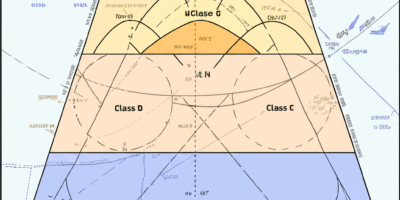
  • Airspace: Identify Class B, C, D, and restricted airspace along your route and plan transitions or circumnavigation accordingly
  • Weather Patterns: Consider prevailing winds, typical afternoon convective activity, and coastal marine layers
  • Navigation Aids: Note VORs, airports, and visual checkpoints for position verification

Time and Distance Calculations

Accurate flight planning requires careful calculation of groundspeed, considering true airspeed, winds aloft, and magnetic variation. Use the E6B flight computer or electronic flight planning tools to determine:

  • True course and magnetic course for each leg
  • Wind correction angle and resulting heading
  • Estimated groundspeed and time en route for each segment
  • Total flight time including taxi, climb, cruise, and descent phases

Fuel Planning and Fuel Stops

Legal Requirements vs. Practical Reserves

FAR 91.151 requires VFR day flights to have enough fuel to fly to the first point of intended landing and, assuming normal cruising speed, to fly after that for at least 30 minutes. For night VFR, the reserve requirement increases to 45 minutes. However, experienced pilots typically plan for much greater reserves.

Calculating Fuel Requirements

A comprehensive fuel calculation includes:

  • Taxi and run-up: Allow appropriate fuel burn for ground operations
  • Climb: Calculate fuel consumed during climb to cruise altitude using POH climb performance data
  • Cruise: Apply proper fuel consumption rates for selected power setting and altitude
  • Descent and approach: Include fuel for the descent and approach phases
  • Reserve fuel: Plan for at least 1 hour reserve beyond regulatory minimums
  • Contingency: Add buffer for headwinds stronger than forecast or diversions

Strategic Fuel Stop Planning

When selecting fuel stops, consider fuel prices, services available, runway length and condition, and proximity to your route. Popular flight planning apps display fuel prices at airports along your route, helping you optimize both time and cost.

Alternate Airport Selection

Why Alternates Matter for VFR Pilots

While VFR flight plans do not legally require filing an alternate, prudent pilots always identify suitable alternatives along their route. Consider alternates when:

  • Weather conditions are marginal or deteriorating
  • The destination has limited services or a single runway
  • Flying to unfamiliar territory or over challenging terrain
  • Crossing significant bodies of water or remote areas

Alternate Selection Criteria

Good alternates should have favorable weather forecasts, adequate runway length, appropriate lighting if applicable, fuel availability, and ground transportation if needed. Mark potential alternates on your chart and brief their frequencies before departure.

Weight and Balance: The Critical Calculation

Understanding the Fundamentals

Every aircraft has weight limitations and center of gravity (CG) limits that must be respected for safe flight. The weight and balance calculation ensures that the aircraft can perform safely and predictably throughout all phases of flight.

Performing the Calculation

A proper weight and balance calculation requires:

  • Empty weight and moment: From aircraft weight and balance records
  • Pilot and passengers: Actual weights, not standard assumptions
  • Baggage: Weighed and loaded within baggage compartment limits
  • Fuel: Calculate for various phases – full fuel at departure, expected fuel at destination

CG Considerations

The CG position affects aircraft stability and control. A forward CG increases stability but requires more back pressure and may exceed elevator authority in some conditions. An aft CG decreases stability and can make the aircraft difficult or impossible to control. Always verify the CG remains within limits throughout the flight as fuel burns off.

Putting It All Together

Successful cross-country flight planning integrates all these elements into a coherent plan. Create your navigation log with checkpoints, frequencies, and timing estimates. Brief yourself on the route, weather, NOTAMs, and TFRs. File a VFR flight plan for search and rescue purposes. Most importantly, remain flexible and prepared to divert, delay, or cancel if conditions change. The destination will still be there when conditions improve.

Emily Carter

Emily Carter

Author & Expert

Jason Michael, an ATP-rated pilot who flies the C-17 for the U.S. Air Force, is the editor of Skyhighflighttraining. Articles on the site are researched, fact-checked, and reviewed before publication. Read our editorial standards or send a correction at the editorial policy page.

271 Articles
View All Posts

Stay in the loop

Get the latest skyhighflighttraining updates delivered to your inbox.