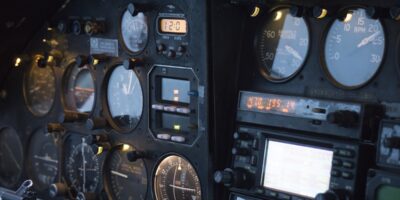
Understanding the Go/No-Go Decision
Every flight begins with a critical decision that separates professional aviators from those who take unnecessary risks: the go/no-go decision. This process involves evaluating weather conditions, aircraft status, pilot fitness, and mission requirements to determine whether a flight should proceed as planned, be modified, or cancelled entirely.
The go/no-go decision is not a sign of weakness or lack of skill. In fact, the most experienced pilots are often the most conservative in their weather-related decisions. They understand that the sky will always be there tomorrow, but poor judgment can have permanent consequences.
Regulatory Weather Minimums
VFR Weather Minimums by Airspace
Visual Flight Rules (VFR) weather minimums vary by airspace class and are established by the FAA in 14 CFR 91.155. Understanding these requirements is fundamental to safe flight planning:
- Class A Airspace: VFR flight is not permitted (18,000 feet MSL and above)
- Class B Airspace: 3 statute miles visibility, clear of clouds
- Class C and D Airspace: 3 statute miles visibility, 500 feet below clouds, 1,000 feet above clouds, 2,000 feet horizontal from clouds
- Class E Airspace (below 10,000 feet MSL): 3 statute miles visibility, 500 feet below clouds, 1,000 feet above clouds, 2,000 feet horizontal from clouds
- Class G Airspace (day, below 1,200 feet AGL): 1 statute mile visibility, clear of clouds
Personal Minimums vs. Legal Minimums
Legal minimums represent the absolute floor for VFR operations, but personal minimums should always be higher, especially for less experienced pilots. A student pilot or newly certificated private pilot should consider establishing personal minimums such as:
- Ceiling of at least 3,000 feet AGL
- Visibility of 5 statute miles or greater
- Crosswind component less than 50% of demonstrated crosswind capability
- No forecast for convective activity or icing conditions
Weather Products for Decision Making
Essential Preflight Weather Briefing Elements
A thorough weather briefing from sources such as 1800wxbrief.com, ForeFlight, or an FAA Flight Service Station should include analysis of:
- METARs: Current surface observations at departure, destination, and along the route
- TAFs: Terminal Aerodrome Forecasts for airports with published forecasts
- PIREPs: Pilot reports of actual conditions encountered by other aircraft
- AIRMETs and SIGMETs: Significant meteorological information affecting flight safety
- Winds Aloft: Forecast winds at various altitudes for flight planning
- Radar and Satellite Imagery: Current precipitation and cloud cover patterns
The PAVE Checklist for Risk Assessment
The PAVE checklist provides a structured approach to evaluating all factors that affect flight safety:
P – Pilot
Are you physically and mentally prepared for this flight? Consider your IMSAFE status: Illness, Medication, Stress, Alcohol, Fatigue, and Eating. Your currency and recent experience in similar conditions matters significantly.
A – Aircraft
Is the aircraft airworthy and appropriate for the planned flight? Review maintenance status, equipment functionality, and performance capabilities for the expected conditions.
V – Environment
Evaluate weather, terrain, airspace, and airport conditions. Consider how these factors might change during the flight and what alternatives exist.
E – External Pressures
Recognize pressures that might cloud judgment, such as appointments, passengers waiting, or desire to reach a destination. These pressures can lead to hazardous attitudes.
Developing Sound Aeronautical Decision Making
Good decision making in aviation is a skill that develops over time through training, experience, and deliberate practice. The FAA emphasizes Aeronautical Decision Making (ADM) as a systematic approach to mental processes used by pilots to consistently determine the best course of action in response to a given set of circumstances.
Key principles include maintaining situational awareness, recognizing hazardous attitudes, managing risk continuously throughout the flight, and having the discipline to modify or cancel flights when conditions warrant. Remember: a successful flight that never departs because of unsafe conditions is still a successful flight.
Stay in the loop
Get the latest skyhighflighttraining updates delivered to your inbox.