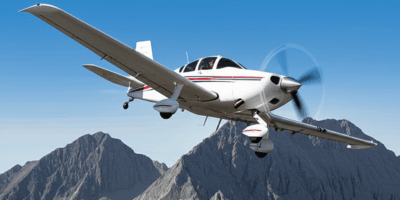
Steep turns represent one of the most fundamental flight maneuvers, yet they reveal weaknesses in coordination, scan, and aircraft control that simpler maneuvers hide. The current Airman Certification Standards require 45-degree bank steep turns—demanding enough to expose deficiencies while remaining within normal flight envelopes.
ACS Standards for Steep Turns
The current ACS specifies precise tolerances for steep turns during practical tests. You must maintain 45 degrees of bank (±5 degrees), maintain altitude (±100 feet), roll out on a heading (±10 degrees of entry heading), and maintain coordinated flight throughout. These tolerances apply continuously, not just at specific checkpoints.
The examiner evaluates not just whether you meet these numbers but how you meet them. Smooth, confident control inputs demonstrate proficiency. Constant corrections and chasing parameters suggest the need for additional practice.
The Physics of Steep Turns
Understanding why steep turns require specific techniques helps you perform them correctly.
Load Factor
In a coordinated turn, the vertical component of lift must support the aircraft’s weight. As bank angle increases, the lift vector tilts, and total lift must increase to maintain the vertical component. At 45 degrees of bank, load factor is approximately 1.4 G’s—meaning the wings must produce 40% more lift than in level flight.
This increased lift requirement means induced drag increases significantly. Without additional power, the aircraft will slow and descend. Most aircraft require noticeable power addition during steep turns to maintain altitude and airspeed.
Stall Speed
Increased load factor raises the stall speed. At 45 degrees of bank, stall speed increases approximately 19%. In an aircraft with a normal stall speed of 50 knots, the accelerated stall speed becomes about 59 knots. This reduced stall margin demands attention to airspeed throughout the maneuver.
Overbanking Tendency
In a steep turn, the outer wing travels faster than the inner wing, generating more lift. This creates a tendency for the bank to steepen unless actively corrected. You’ll need continuous aileron pressure toward the high wing to maintain precisely 45 degrees.
Entry Technique
Proper entry sets up the entire maneuver. Rushing the entry creates problems that compound throughout the turn.
Preparation
Before entering, clear the area with 90-degree clearing turns or other appropriate visual scan. Select an entry heading that allows you to identify the rollout point (a cardinal heading or distinctive visual reference). Note your starting altitude.
Rolling Into the Turn
Begin with a smooth, coordinated roll toward the desired bank. Don’t rush—a 2-3 second roll to 45 degrees is appropriate. As bank approaches 45 degrees, begin adding back pressure and power simultaneously. Both additions are gradual, matching the increasing load factor.
If you wait until reaching 45 degrees to add back pressure, you’ll lose altitude. If you add too much too early, you’ll climb. Synchronizing the back pressure with the roll takes practice.
Maintaining the Turn
Once established, maintaining precise parameters requires continuous attention and small corrections.
Bank Control
The overbanking tendency requires constant awareness. You’ll need aileron pressure toward the high wing throughout the turn. The amount varies with airspeed and bank angle—finding the right pressure takes time.
Watch for common errors: letting the bank steepen past 45 degrees, or overcompensating and shallowing below 45 degrees. Either error typically cascades into altitude deviations as well.
Altitude Control
Altitude is controlled primarily through back pressure adjustment. If altitude starts decreasing, add back pressure. If increasing, relax back pressure slightly. Power adjustments can help but work more slowly than pitch changes.
Small, immediate corrections prevent large deviations. If you lose 50 feet before correcting, regaining it without overshooting is difficult. Constant scan and quick response maintain precise altitude.
Coordination
The ball should remain centered throughout the steep turn. Initial tendency is often to slip (ball toward low wing) because of insufficient rudder with aileron input. As you add back pressure, you may need additional rudder to maintain coordination.
Scan Pattern
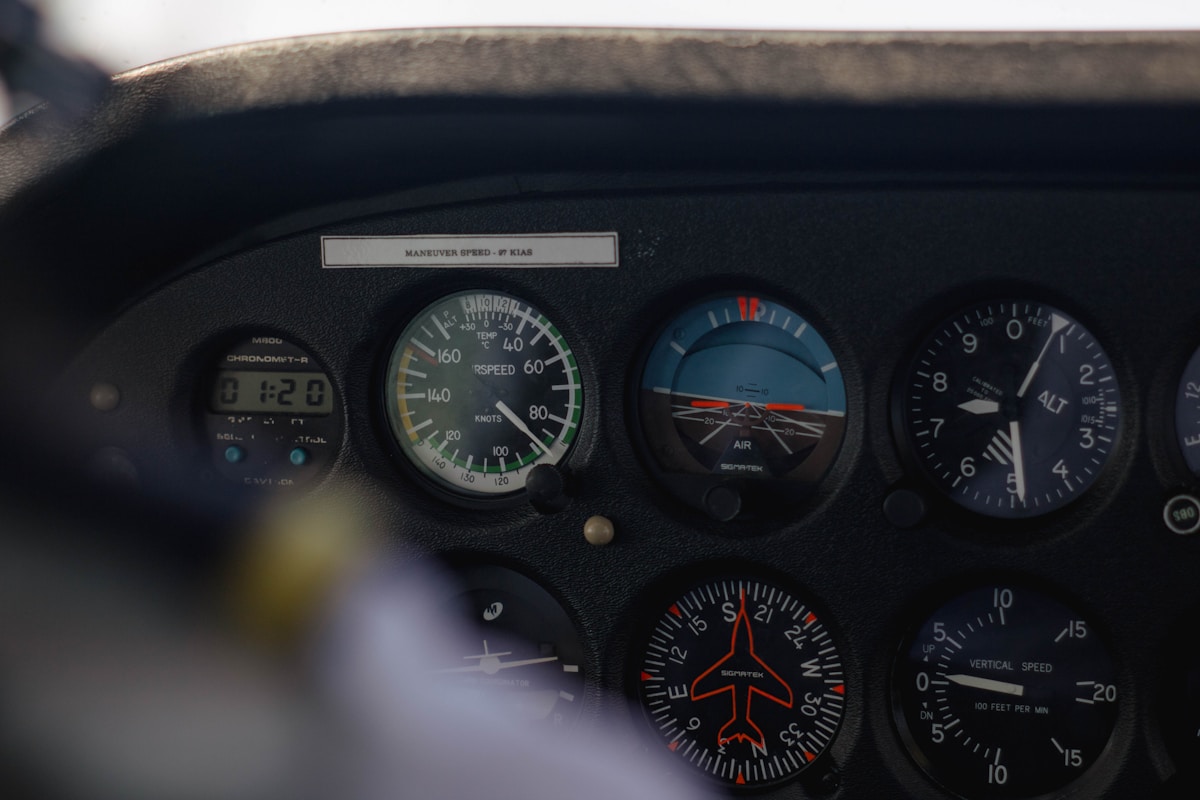
Effective steep turns require a disciplined scan. Include attitude indicator (bank and pitch), altimeter, VSI, airspeed, turn coordinator (coordination), and outside visual references. Don’t fixate on any single instrument—keep the scan moving.
Outside visual references help maintain orientation and identify the rollout point. In clear conditions, a point on the horizon serves as the primary attitude reference, with instruments confirming.
Rollout Technique
The rollout should be as smooth and precise as the entry.
Anticipating Rollout
Begin the rollout approximately 20-25 degrees before your target heading. The exact lead depends on your roll rate and the aircraft’s characteristics. With practice, you’ll learn the correct lead for your aircraft.
Coordinated Rollout
As you reduce bank, smoothly reduce back pressure and power. If you maintain the same back pressure during rollout, you’ll climb. Coordinate the reduction with the decreasing bank, reversing the process used during entry.
Heading Check
Roll out wings level and verify heading. If you’re slightly off, note the direction and adjust during the next turn if performing the standard both-direction sequence. Minor heading errors on rollout are common and acceptable within tolerances.
Common Errors and Corrections
Certain mistakes appear consistently during steep turn practice:
Losing altitude: Usually caused by insufficient back pressure or insufficient power. Add back pressure first for immediate effect. If chronic altitude loss occurs, add power.
Gaining altitude: Too much back pressure or too much power. Reduce back pressure slightly. If you’ve added significant power, you may need to reduce that as well.
Bank exceeding 45 degrees: Overbanking tendency not corrected. Increase aileron pressure toward high wing. This will slightly reduce rate of turn and may require minor heading adjustment for rollout.
Inconsistent bank: Usually indicates poor scan or attempting corrections that are too large. Make smaller, more frequent adjustments. Keep the scan moving.
Skidding or slipping: Coordination issue, usually from unmatched aileron and rudder inputs. Consciously step on the ball. More outside time helps maintain natural coordination.
Practice Strategy
Steep turns improve with focused practice. Begin with single turns in each direction, working on entry and rollout. Progress to continuous turns, reversing direction smoothly at the rollout point. Add challenges: eyes closed for 90 degrees (with instructor), recovery from deliberately induced errors, or steep turns to specific headings.
Use video if possible to review technique and body position. Often, errors invisible from the pilot’s seat become obvious on review.
Beyond the Checkride
Steep turns provide more than checkride preparation. The skills developed—coordinated control, effective scan, immediate error correction, and divided attention—apply to all phases of flight. Pilots who perform steep turns smoothly typically fly smooth approaches and patterns as well.
Continue practicing steep turns after certification. They’re an excellent way to maintain and demonstrate proficiency, and they remain challenging enough to be engaging no matter how many hours you’ve logged.