Night flying transforms familiar landscapes into alien terrain. The airport you’ve visited dozens of times looks completely different after sunset. The visual cues you rely on for attitude, navigation, and traffic avoidance either disappear or change dramatically. Understanding these differences—and adapting your techniques accordingly—makes the difference between safe night operations and dangerous ones.
Visual Challenges at Night
The most fundamental difference between day and night VFR is reduced visual information. During the day, the horizon provides constant attitude reference. At night, the horizon may be invisible, indistinct, or misleading. City lights can appear as stars; stars can appear as ground lights. The vestibular illusions that plague instrument flying become more common at night when visual cues conflict with or fail to confirm inner ear sensations.
Dark Adaptation
Your eyes require 20-30 minutes to fully adapt to darkness. The rods in your peripheral vision become primary sensors at night, while the cones in your central vision lose effectiveness. This means you see better at night using peripheral vision—look slightly to the side of what you want to see, and it becomes clearer.
Protect your night vision carefully. Bright lights reset adaptation, requiring another 20-30 minutes to recover. Use red cockpit lighting when possible, dim white lights to minimum, and avoid looking at bright ground lights during approach.
Judging Distance and Altitude
Distance and altitude judgment become unreliable at night. Bright lights appear closer than dim ones regardless of actual distance. Runway lights on a dark night can lead to dangerously low approaches because there’s no peripheral reference to indicate descent rate. The black hole approach—toward a runway with no surrounding lights—claims pilots every year who descended into terrain they couldn’t see.
Night Navigation
Pilotage, the backbone of VFR navigation, becomes difficult or impossible at night. Roads, rivers, and terrain features that stood out during the day become invisible. Instead, you navigate by:
- Lighted landmarks: Cities, airports, highways, and towers become primary checkpoints
- Electronic navigation: VOR, GPS, and moving maps provide reliable position information
- Dead reckoning: Heading and time calculations remain valid when checkpoints aren’t visible
Plan night flights with these limitations in mind. Identify lighted checkpoints along your route. Know the location of lighted airports for emergency diversion. Consider that weather you could easily see and avoid during the day may be invisible at night until you’re in it.
Traffic Avoidance
Seeing other aircraft at night depends entirely on their lights. Position lights (red left, green right, white tail) indicate aircraft direction of travel. Anti-collision lights (strobes and beacons) attract attention but can be blinding in clouds or haze. Understand what you’re seeing: if you see red and green together, the aircraft is coming toward you; if you see only red, it’s crossing left to right; only green means crossing right to left.
Scan continuously for traffic. Other aircraft may be less visible than during the day, especially against city light backgrounds. Use flight following for traffic advisories whenever possible.
Weather Considerations
Weather evaluation becomes more difficult at night. You can’t see building clouds, approaching fronts, or deteriorating visibility until you’re in them. This makes preflight weather planning even more critical—get a thorough briefing and understand what weather to expect.
Haze and fog that were visible layers during the day become invisible traps at night. You might fly into deteriorating conditions without realizing it until forward visibility drops dramatically. If you notice halos around lights or difficulty seeing stars that were previously visible, conditions are deteriorating.
Airport Operations
Airports look very different at night. The runway environment lighting system—VASI, PAPI, approach lights, runway lights—becomes your primary reference. Learn to use these systems:
- VASI/PAPI: Red over white indicates proper glidepath
- Runway edge lights: White (or yellow for last 2,000 feet)
- Threshold lights: Green facing approach, red facing departure
- REILs: Flashing lights marking runway threshold
Many smaller airports have pilot-controlled lighting (PCL). Know the frequencies and click patterns for airports on your route before departure.
Night Takeoff and Departure
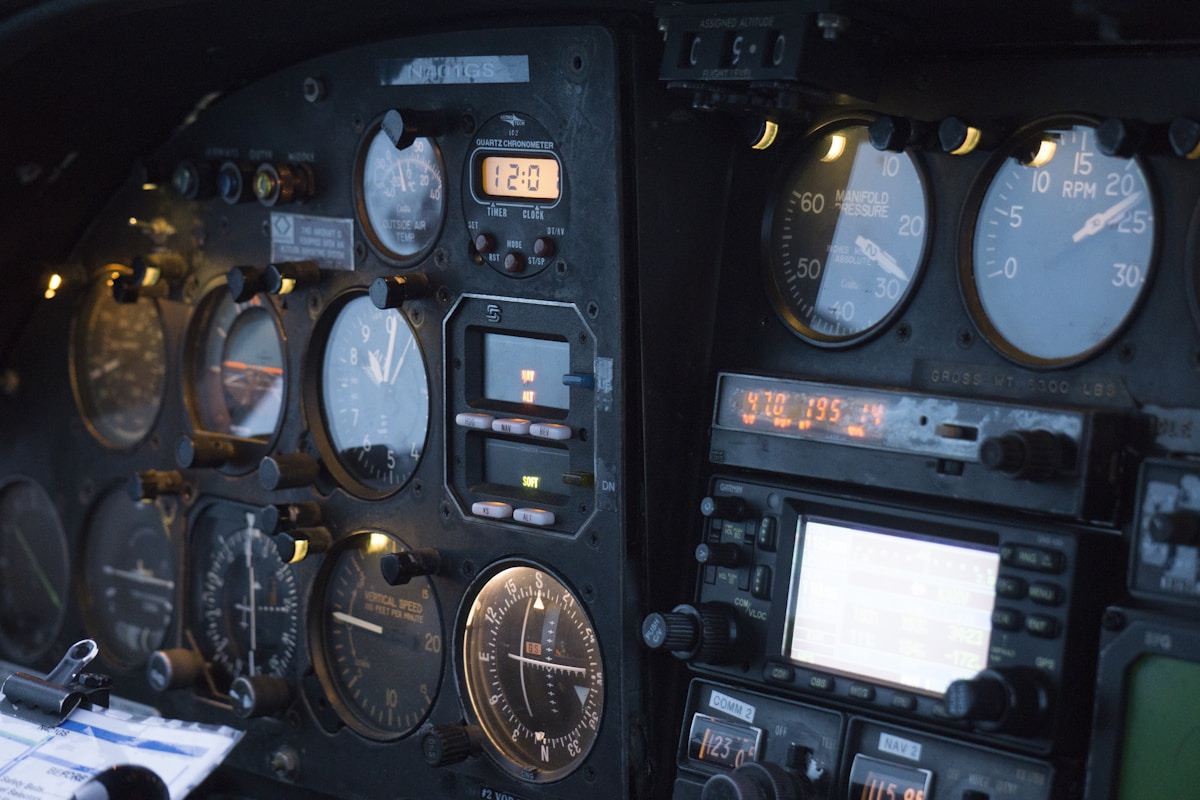
Night takeoffs require increased attention to instruments. Once you lift off, visual attitude reference may disappear immediately—especially from dark runways with no surrounding lights. Transition to instruments promptly after rotation and verify positive climb rate. Many night accidents occur shortly after takeoff when pilots experienced spatial disorientation in the climb.
Depart toward lighted areas when possible. Having visible lights ahead provides some horizon reference during climb-out.
Night Approach and Landing
Night landings challenge even experienced pilots. Without peripheral visual cues, judging height during the flare becomes difficult. Common errors include:
- Flaring too high (floating and hard landing)
- Flaring too low (hitting before ready)
- Descending below glidepath on final (black hole approach)
Use the VASI or PAPI religiously during approach. Maintain the proper glidepath all the way to the runway. During the flare, look toward the far end of the runway rather than directly below the aircraft—this provides better height cues from peripheral vision.
Personal Minimums
Establish personal minimums for night flying that exceed legal requirements. Consider requiring:
- Higher ceilings and visibility than day VFR minimums
- Recent night currency beyond the legal three takeoffs and landings
- Better weather forecasts with less uncertainty
- Familiarity with destination airport or practice approaches beforehand
Emergency Considerations
Emergencies at night add the challenge of darkness to an already stressful situation. If you experience engine failure at night, your options for emergency landing fields are severely limited. Unlit areas might be lakes, forests, or cities—you won’t know until too late. If possible, aim for lighted areas or known airports.
Carry a flashlight—preferably two. If electrical failure occurs at night, you need backup lighting for the cockpit. Keep it accessible, with fresh batteries, and preferably with a red lens option.
Building Night Proficiency
Start night training in familiar areas with an experienced instructor. Build experience gradually: first in familiar traffic patterns, then local practice areas, then cross-country flights. Don’t attempt challenging night operations—unfamiliar airports, marginal weather, mountainous terrain—until you’ve developed solid basic night skills.
Night flying offers unique rewards: smooth air, beautiful views, and practical utility for getting places after dark. But it demands respect and preparation. Treat every night flight with the seriousness it deserves, and night flying becomes another valuable tool in your aviation skillset.