What’s Actually Happening When You Bounce
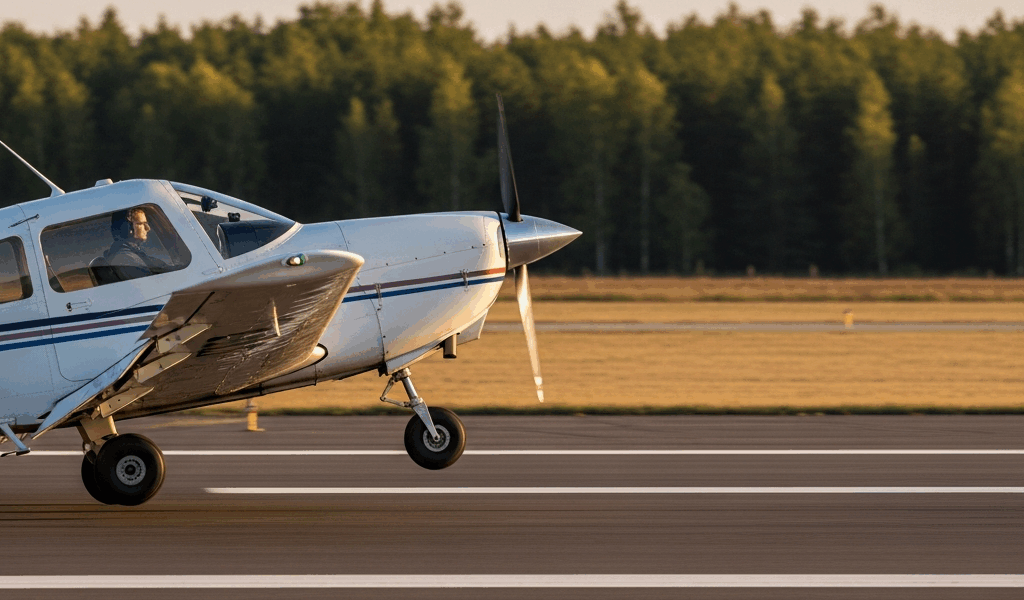
Bounced landings have gotten messy with all the bad advice flying around — flight forums, YouTube comments, that one guy at the FBO who’s “seen everything.” So let me cut through it. When your wheels hit the runway and the plane pops back into the air, the physics is simple: your gear touched while the wing was still producing lift. The asphalt pushed up harder than the wing could absorb, and the aircraft rebounded. Like a basketball dropped from six feet. Nothing mysterious. Your plane still wanted to fly.
A bounce is not the same as a firm landing. Firm means you touched down with a controlled descent rate, the aircraft settled, and you rolled out. Done. A bounce means the mains contacted — then the plane left the ground again. Sometimes 10 or 20 feet back into the air. Sometimes just skipping along like a flat stone on water. You know it when it happens. Your whole body knows.
Important part first. Most students treat a bounce like a handling error. It’s not. It’s an energy state problem. Too much lift, too much speed, or too much vertical momentum at the moment of contact. Understanding that distinction changes everything about how you diagnose the next one.
The Three Root Causes Most Students Miss
Student pilots bounce landings repeatedly because they’re diagnosing the bounce itself instead of what led to it. The bounce is the symptom. The cause happened 10 seconds earlier — usually on short final, sometimes earlier than that.
Carrying Too Much Speed Into the Flare
This is the big one. You’re on final at 65 knots instead of 55. You start your flare at the right altitude but you haven’t bled the speed first. The aircraft floats. The wing is still producing lift at a speed it should have shed by now. When you finally touch, you’re moving fast enough that any vertical load at all sends you back up.
What it feels like: The runway comes up slower than you expected. You’re pulling back and the plane refuses to descend. You’re thinking — why isn’t this thing coming down? The sight picture feels too high. Your airspeed still reads 60, 62, 64. Then the mains hit and immediately the aircraft jumps. That’s your clue right there.
Touch at 70 knots instead of 50 and the rebound gets violent fast. The flare takes longer, the energy is wrong, and the bounce that follows is springy and sharp. Speed is the villain here — at least if you’re seeing this pattern repeatedly.
Flaring Too Late With High Descent Rate
Your speed is fine — maybe 55 knots. But you don’t begin the flare until 15 feet, maybe 10. Your descent rate is still 400, 500 feet per minute. You pull back hard. The nose pitches up. But the vertical momentum doesn’t care. The mains slam in. Shock absorbers compress. Aircraft bounces. The whole sequence takes about one second.
What it feels like: The runway rushes up. You feel rushed. You pull back harder and faster than usual. The touchdown is loud — sometimes a bang. You might hear the nose gear protest. The bounce that follows is sharp and quick, less a float and more a hard skip off the pavement.
Timing is everything here. You started the flare, but you started it when the energy state was already too low to arrest descent gently. You asked the wing to save you in an instant when it needed four or five seconds to do the job right.
Ballooning Then Nose-Dropping Without Power
You flare correctly. The aircraft floats. Descent slows — good. But instead of holding back-pressure and letting the plane settle a few inches above the runway, you relax the yoke. Maybe you get nervous. Maybe it feels like you’ve been floating too long. The nose drops. Lift bleeds away. The aircraft descends nose-down and hits mains-first. Gear compresses, nose gear catches hard, the airframe springs back up.
What it feels like: A moment of floating — descent has stopped, everything feels right. Then it’s gone. Nose down. Sinking fast. Hard impact. Bounce. That sequence is unmistakable once you’ve felt it.
This one masquerades as a technique problem. It isn’t. You were on track. You broke the sequence yourself with one input — or the absence of one.
How to Know Which Mistake You’re Making
The diagnostic window is the 30 seconds after rollout. Memory is fresh. Your hands still feel the controls. Use it.
First question: Did the runway come up fast or slow? Fast means late flare or unmanaged descent rate. Slow means floating — excess speed. That single answer narrows it down immediately.
Second: What was your airspeed at the 50-foot mark? At touchdown? If it showed 65 knots or higher at 50 feet, you carried speed. Write that number in your logbook — not an estimate, the actual number. Then look back at your last three flights. Same pattern?
Third: Did the mains feel like a light kiss or a firm thud? Light contact with an immediate bounce points to excess speed. Firm contact — almost a bang — points to descent rate. That distinction matters more than most students realize.
Fourth: In the seconds before touchdown, were you floating? Actually staying airborne longer than expected? Or did the descent feel normal right up until impact? Floating points to speed or an early flare. Normal descent until impact points to a late one.
Run through those four questions on the taxiway while everything is still fresh. Match what you felt to the three causes above. You’ll know your error — at least if you’re honest with yourself about what you actually felt versus what you wished had happened.
What to Do in the First Half Second After a Bounce
The instant the aircraft rebounds, you have one real decision: go around or try to salvage it.
Go around. That’s the answer. Climb to pattern altitude, reconfigure, come back around. I’m apparently a slow learner about this — I bounced hard in a Cessna 172 at my home airport, tried to save it, touched down twice more, and burned through roughly 200 feet of runway proving I had no business landing that day. My CFI sat in the right seat and said nothing. He didn’t have to. Side-step the error I made.
If the bounce is genuinely small — a light skip, not a full rebound — and you’ve got 4,000 feet ahead of you, staying on is an option. Reduce power slightly, keep the nose up, let the aircraft settle. But understand that your margin for error is gone. One more bad input and you’re going around anyway, just with less runway.
The go-around is not a failure. Executing it cleanly at the right moment is exactly what good pilots do.
How to Train Out the Habit Before Your Next Lesson
Bounced landings are correctable. That’s what makes this fixable for students who are willing to do the diagnostic work. You’re not missing a talent. You’re missing a skill or a specific piece of pattern knowledge — and those are learnable.
Before your next flight, chair-fly the landing five times. Sit somewhere quiet and walk through short final, descent rate, flare cues, roundout. Say your speeds out loud — actually say them. Name your visual references. Where is the runway in the windscreen? How does the descent feel at 200 feet? This takes maybe 10 minutes and costs nothing. It works anyway.
On final, use your VASI or PAPI. Two white lights on a standard PAPI — you’re on glideslope. Don’t ignore that information. It’s telling you descent rate directly, which is exactly what bounced-landing pilots tend to misjudge.
After each landing, ask your instructor one specific question: “Where did my flare begin, and was my descent rate appropriate at that point?” Not “what did I do wrong?” — that’s too broad and invites a lecture instead of an answer. Ask the diagnostic question. Write down what they say. The pattern in those notes will tell you more than any forum thread.
Bounced landings stop when you stop recreating the same energy state on short final. The physics never changes. Your job is energy management — not fighting the airplane, not saving a bad approach. Manage the energy and the landing takes care of itself.



Stay in the loop
Get the latest skyhighflighttraining updates delivered to your inbox.