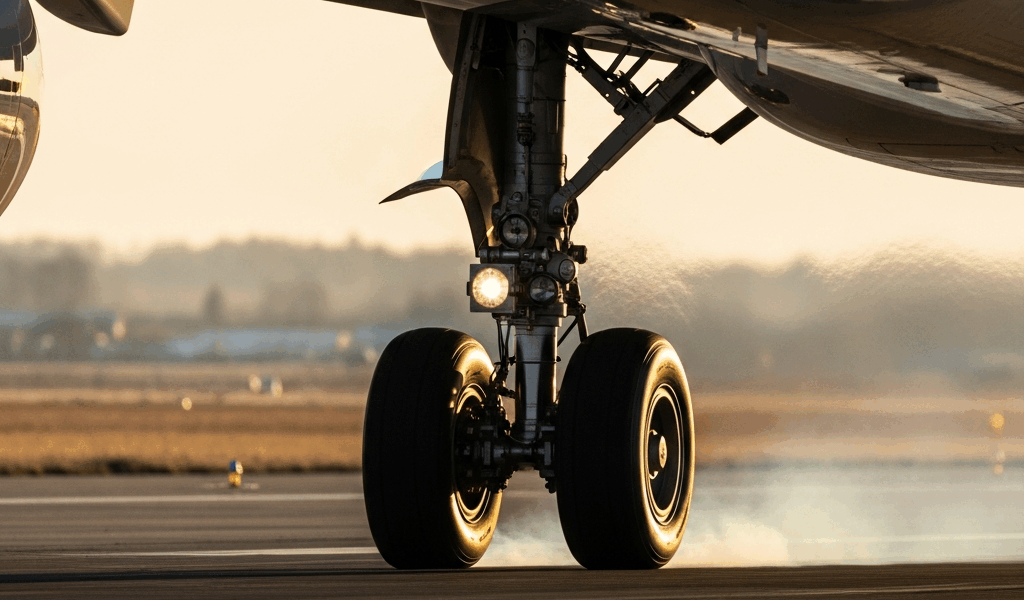
What Touch and Goes Were Actually Designed to Do
Landing practice has become tricky with all the conflicting advice flying around. As someone who spent years logging dual instruction from both seats, I taught myself the working side of what touch and goes actually do to your technique. Today, I will share it all with you.
Touch and goes exist for one reason: efficiency. A CFI can log more flight time, push through more pattern work in a single lesson, and keep a packed schedule moving without dead time taxiing back to runway 28. I’m not saying that cynically — I’ve been the instructor staring at a 10-hour booking sheet wondering how to fit everyone in. The economics genuinely make sense.
But efficient isn’t the same as optimal. Touch and goes were built around scheduling constraints and fuel costs — not around how your nervous system actually learns to grease an airplane onto pavement. Most instructors defend them without blinking because they’ve always been part of the curriculum. That doesn’t make them neutral for your muscle memory.
That’s what makes this worth examining: touch and goes can hide problems that a full-stop landing exposes in about 30 seconds flat.
Three Habits They Build in the Wrong Direction
Rushed Flap Retraction and the Stabilization Skip
During a touch and go, you’re already mentally planning the next takeoff while the mains are still on the pavement. Land, retract flaps, advance throttle, go. The whole after-landing phase compresses into seconds instead of minutes. Your brain starts treating flap retraction as one bundled unit with the landing itself.
You stop pausing to verify you’re actually stable. You’re not scanning for runway debris, crosswind drift, or asymmetric braking. You retract incrementally while your eyes are already chasing climb attitude. The stabilization check disappears — not because you skipped it, but because the habit loop swallowed it whole.
Then comes a full-stop landing during checkride prep. You taxi back. There’s silence. Suddenly you realize you never confirmed your descent was stabilized through the last 500 feet. You were too busy anticipating the next phase to actually fly the one you were in. That’s the moment hesitation kills confidence — not the landing itself.
Throttle Application Before the Aircraft Settles
A touch and go demands forward momentum, constantly. The second your wheels compress, your hands are already asking “when do I add power?” Most student pilots end up advancing the throttle while the aircraft is still settling — still bleeding energy unevenly, still rocking slightly.
This trains your hands to chase airspeed instead of wait for it. You add power, the nose pitches, you’re not at rotation speed yet, so you add more — overshooting by 5 knots. Then you’re high on climb-out. Pitch attitude hunting happens because the inputs came too early.
On a full-stop landing, you’d sit long enough to feel the aircraft truly settle. All three wheels locked down, weight distributed, energy gone. Only then does advancing the throttle make sense. But after 50 touch and goes in a row, your muscle memory genuinely doesn’t know how to wait. Skip past the mistake I made — I did 60 consecutive touch and goes during primary training and spent three sessions unlearning the throttle surge habit afterward.
Abbreviated After-Landing Scan and Checklist Discipline
The after-landing checklist isn’t decorative. Flaps up, trim reset, carb heat off, doors confirmed closed, lights adjusted. It takes maybe 90 seconds if you’re methodical about it. During a touch and go, you’re hitting three items before the nosewheel even leaves the pavement.
But what is the real damage here? In essence, it’s conditioned checklist skipping. But it’s much more than that — it’s your brain learning that checklists are optional when the pace picks up. On a cross-country into an unfamiliar airport in gusty 15-knot conditions, that exact habit resurfaces. You clear the runway, you’re not quite sure if you reset the trim, you taxi anyway. Muscle memory doesn’t distinguish between pattern work and the real thing. It just fires.
How to Tell If Touch and Goes Have Already Affected Your Landings
Worth putting near the top. Here’s the self-diagnosis.
You flare late and rush the rollout. The landing feels abrupt — reactive rather than cushioned — because you’re too focused on forward momentum to finesse the last two feet of descent.
Your throttle surges on initial climbout. Not a smooth transition to climb power — a jab, a correction, then pitch hunting to compensate. That’s the touch-and-go reflex firing on a departure it wasn’t supposed to be part of.
You feel vaguely wrong during a full-stop taxi back. Walking through the after-landing checklist, parking, completing shutdown — it feels unfamiliar, like you’ve missed a step somewhere. You probably haven’t. It just feels that way because the whole sequence is unfamiliar.
You haven’t actually failed any landings, probably. But they don’t feel crisp. They feel like the aircraft is flying you through the last 200 feet instead of the other way around. That’s conditioned reflexes doing the work instead of intentional procedure.
The Fix — A Full-Stop Protocol That Resets the Habit Loop
So, without further ado, let’s dive in.
Book four hours of dual instruction — at least if you want to actually reset what the touch and goes built. No touch and goes in this block. Zero. Your instructor parks, you complete the full after-landing checklist out loud, you sit on the centerline for 30 seconds confirming the aircraft is stable and settled, then you taxi back deliberately. Every time.
Flight one focuses on a single thing: landing and immediate post-landing actions. Forget efficiency. Forget where the next slot is. You land, run the checklist, verify configuration, then proceed. Repetition builds the new reflex — that’s the whole mechanism.
Flight two, add a verbal checkpoint on centerline. Before you retract flaps, you say out loud: “Aircraft is stable. Runway is clear. Landing is complete.” I’m apparently someone who needs to hear decisions stated rather than just feel them — and it works for me while the silent version never stuck. That verbal pause interrupts the conditioned flap-retraction reflex. Your nervous system needs the stated decision, not just the physical cue.
Flight three, verbalize your full flow check before requesting takeoff clearance. Trim set. Controls free. Fuel pump on. Doors confirmed. Lights. This sounds ridiculous at 200 hours — it sounded ridiculous to me too — but your muscle memory has been trained to skip this step under time pressure. You’re retraining it now. That’s the whole point of the exercise.
Four hours isn’t an arbitrary number. Rough consensus in motor learning research puts full automation of a new movement pattern somewhere around 300 repetitions. At three to four full-stop landings per hour, you’ll reach that threshold. The methodical, checklist-based, deliberate version of landing becomes the default again instead of the exception.
When Touch and Goes Are Actually Fine
But what is the appropriate use case? In essence, it’s currency maintenance for pilots who already have solid technique locked in. But it’s much more than that — it’s also a legitimate tool for specific drills under direct CFI supervision.
If you’re a 1,000-hour private pilot doing four landings a month to stay current, touch and goes are efficient and completely appropriate. If your CFI wants five consecutive forward slips to landing during a gusty afternoon session, touch and goes make logistical sense. That’s what makes the tool endearing to us when it’s used correctly.
The problem starts when touch and goes become the default training method from lesson one straight through to checkride prep. Frustrated by slow student progress and constrained by 90-minute lesson blocks, instructors defaulted to touch and goes using whatever runway was available — and the habit of over-relying on them eventually evolved into the standard curriculum most flight schools run today.
Your checkride examiner will notice the signatures immediately. Longer flights will expose them even faster. Touch and goes are a tool — a genuinely useful one. When that tool becomes the only method your hands know, it stops being efficient and starts being the ceiling on how good your landings can actually get.


Stay in the loop
Get the latest skyhighflighttraining updates delivered to your inbox.