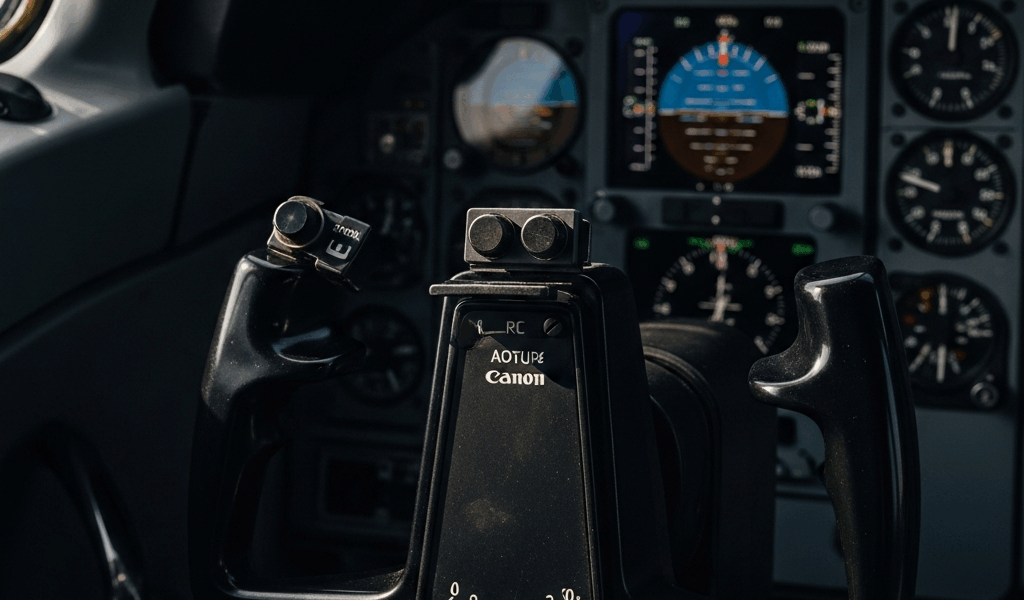
Why Your Stall Recovery Is Making Things Worse
Stall recovery has turned into a moving target with all the conflicting advice flying around. Quick callout up front — because if you landed here after a rough practice session or your CFI gave you that look during your last lesson, you already know something isn’t clicking. You’re doing exactly what you think you’re supposed to do. Pulling back. Adding power. Leveling the wings. And somehow the airplane feels angrier than before.
The problem isn’t textbook technique. It’s three specific mistakes that students drill so deep under stress they go fully automatic. And once something’s automatic, it’s genuinely hard to unlearn. I spent fifteen hours chasing these habits in a Cessna 172 — a 2019 Skyhawk with a Garmin G1000, nothing exotic — before my instructor finally isolated which one was wrecking my recovery every single time. Today I’ll share it all with you.
The Instinct That Gets You Into Trouble First
Here’s what happens in your body during stall entry: nose drops, wing loses lift, you feel that brief nauseating weightlessness. Maybe half a second. It’s disorienting in a way that’s hard to describe until you’ve felt it. And your instinct — the deep animal one — is to pull back. Hard.
I get it. The airplane is nose-down, so you point it up. Makes perfect sense. Also wrong.
Pulling back on the yoke immediately after the stall break reloads the wing before it gets a chance to unstall. Angle of attack climbs again. Air stops flowing cleanly over the surface. Now you’re deeper in the stall — not out of it. The nose wants to drop further. The buffet gets worse. You pull harder. This whole cycle takes maybe three seconds but feels like slow-motion panic.
The physical sensation is brutal, honestly. Controls go mushy. The airplane shudders. Your brain is screaming that you need more back pressure to control the nose. That’s the lie. The lie is what keeps you stalled.
What actually needs to happen: recognize the stall, reduce back pressure, and let gravity and forward airspeed do the initial break. Not a dive. Not an aggressive push forward. Just release the back pressure you’ve been holding. That single movement — relaxing your grip, not forcing anything — is what unstalls the wing. Everything else follows from that one moment.
Why Throttle Timing Matters More Than You Think
Students love to jam in full power immediately. Makes intuitive sense. Engine noise comes back up. Airspeed indicator starts moving. Some feeling of control returning.
But adding full throttle before the wing is actually unstalled makes things significantly worse. Steer clear of where I went wrong.
A stalled wing already generates torque. P-factor throws the nose around. Slipstream effects yaw the fuselage. Introduce full engine power into all of that at once and those forces compound fast. The nose yaws hard — usually left — and now you’re fighting directional control on top of an active stall. You instinctively correct with rudder. Over-correcting creates secondary yaw. The stall deepens because the wing hits an even higher angle of attack.
I learned this the hard way in a Piper Warrior — PA-28-161, 160 horsepower — with an instructor who flatly refused to let me touch the throttle until I proved the stall was broken. It felt glacially slow. Sitting in mushy controls, airspeed below 30 knots indicated, watching altitude bleed off, and she’s just waiting. Making me demonstrate the wing is flying again first. But the sequence genuinely matters: pitch forward to break the stall, stabilize briefly, then go to full power.
When you get the order right, the power application is clean. The airplane responds predictably. The nose comes up controlled. Airspeed builds normally. You’re not fighting secondary effects at all — you’re just climbing out.
The Secondary Stall Most Students Never See Coming
This is the one that terrifies CFIs during checkrides. You break the initial stall. Wings level. You feel relief — genuine relief — so you pitch up to climb.
And the wing stalls again.
You’ve just recovered at 3,000 feet. Pitching up aggressively feels right, feels like you’re fixing the problem. But the wing is still slow. Maybe two seconds of clean airflow over it, total. Angle of attack is still too high for the current airspeed even with full power applied. So you stall again. Immediately. Sometimes harder than the first one.
Now you’ve burned another 200 to 300 feet you didn’t have. Your CFI is watching. Margin is gone. That’s what makes this particular mistake so painful for students — it looks like progress right up until it isn’t.
The fix is smooth rather than urgent. After the stall breaks and wings level, you pitch to a climb attitude — not steep, just a gentle nose-up that lets airspeed build naturally. Then you wait. Airspeed comes up. Altitude stops bleeding so fast. Then you’re climbing normally at a safe airspeed. The whole thing probably takes four or five seconds longer than your instincts want it to. That hesitation is the difference between a solid recovery and a secondary stall that ends a checkride.
What Good Recovery Actually Looks and Feels Like
The sequence is five movements with slight overlap: recognize, reduce back pressure, apply full power, level wings, smooth pitch to climb attitude.
Recognize. You feel the buffet or watch airspeed decay or the nose drops. You know. Instantly — no deliberating.
Reduce back pressure. This is a movement of release, not aggression. Hands relax on the yoke. The nose comes down naturally. You’re not forcing anything.
Apply full power simultaneously — as back pressure releases, the other hand goes to full throttle. Not before. Not after. Same instant.
Level the wings. Skidding stall means opposite aileron input to get back to wings level. Smooth, not snappy. One deliberate movement.
Pitch to climb attitude. Gentle. You’re not climbing 1,000 feet per minute yet — you’re building airspeed safely at an attitude that won’t re-stall the wing.
The coordination between steps is what separates sharp recoveries from rough ones. A CFI watching during a checkride is timing each transition. They’re not looking for speed. They’re watching for smooth, deliberate control inputs that feel coordinated — inputs that actually matter.
How to Fix Bad Habits Before Your Checkride
You can’t think your way out of these mistakes during an actual stall. You can only do what you’ve practiced. So the drill work needs to be deliberate — and different from standard repetition.
- Slow-flight to stall transitions: Spend a full hour in slow-flight at 1.2 times VS1, then incrementally reduce back pressure until the stall breaks. No dramatic entries. Just learn what the airplane feels like right at the edge, then practice the break in small doses. Boring but effective.
- Eyes-closed entry recognition: This one’s uncomfortable, but it works. Close your eyes during a shallow stall entry. Listen for the buffet. Feel the control feedback change. When you open your eyes, demonstrate coordinated controls before touching the throttle — prove to yourself the stall is broken first.
- Verbal briefing before each maneuver: Say the recovery sequence out loud before entry: “Recognize, reduce back pressure, power, wings level, climb pitch.” It sounds strange in the headset — I’m apparently a mumbler and my instructor still made me do it — but it actively overwrites the instinct that’s been getting you in trouble.
These habits are fixable. They’re not character flaws. They’re not evidence that you shouldn’t be flying. They’re just the result of repeating the same wrong movement until your nervous system decided it was correct. Deliberate practice breaks that pattern — usually faster than you’d expect.
Your checkride is winnable. You just need to know which instinct to kill first.

Stay in the loop
Get the latest skyhighflighttraining updates delivered to your inbox.