As someone who has made hundreds of go/no-go decisions, I learned everything about weather judgment through careful analysis. Probably should have led with this: the weather briefing said marginal VFR, and I made the call to go anyway. Here is the thought process that led to that decision.
The METAR showed ceilings at 2,500 scattered, visibility 5 miles in light haze. Technically VFR, but not the clear blue skies I prefer for training flights. Had to think carefully about whether this was a go or no-go situation.
Risk Assessment
Checked the TAF for trend analysis. The forecast called for conditions to improve throughout the morning as the low-level moisture burned off. By noon, we were looking at clear below 12,000 and 10 miles visibility. The question was whether conditions would hold until then.
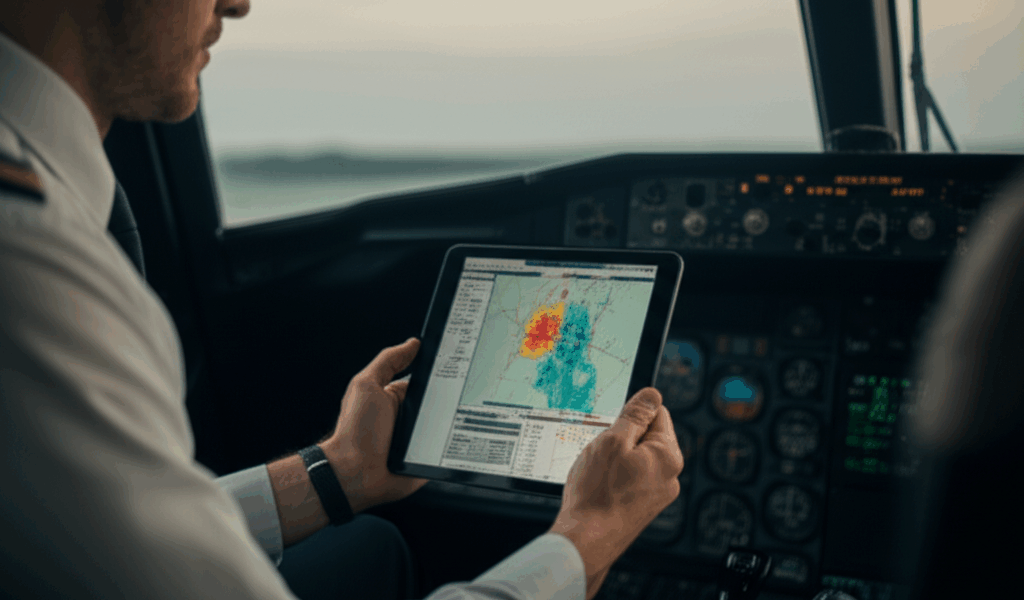
Pulled up the satellite imagery and compared it to the radar. No precipitation anywhere nearby, just a thin layer of stratus that was already starting to break up. Surface observations from neighboring airports confirmed the improving trend – several were already reporting clear. That has gotten complicated with all the data sources available now, but cross-referencing them builds confidence in the decision.
The Decision Matrix
Considered the student’s experience level and comfort. This is a private pilot candidate with about 40 hours, working toward solo cross-country privileges. She needs to learn weather decision-making, but not by getting overwhelmed in deteriorating conditions.
Today’s lesson was pattern work and landings – all within 5 miles of the airport, always in sight of the runway. If conditions worsened, we could be on the ground in less than two minutes. That is a reasonable safety margin.
Execution
Briefed the student on the conditions before we walked out. Discussed what we would do if visibility dropped – immediate pattern entry and landing, no debate. Set personal minimums higher than legal requirements: 3,000 foot ceilings and 6 miles visibility or we would call it.
As predicted, conditions improved throughout the lesson. By the end of our session, we had blue sky overhead and could see 15 miles in every direction.
The Teaching Moment
Marginal VFR does not mean automatic cancellation. It means careful analysis, honest risk assessment, and conservative decision-making. That is what makes a good pilot – knowing when the conditions warrant a go and when they do not. Today was a good example of going when it made sense – and knowing exactly what would make us come back.