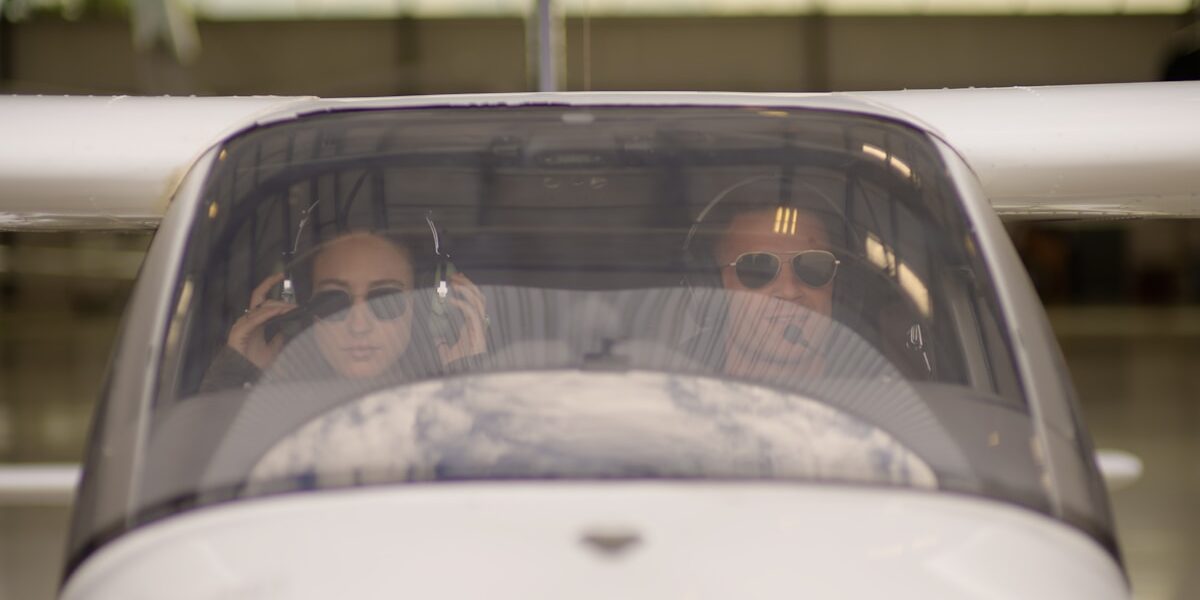
Your first passenger flight creates new responsibilities. Here’s how to handle the passenger briefing professionally.
Before Engine Start
Cover safety items while you have their full attention:
- Seatbelts: How to fasten, adjust, and release. Keep fastened during taxi, takeoff, and landing at minimum.
- Door operation: How to open from inside. Don’t touch during flight unless instructed.
- Emergency exits: Show alternate exits if door becomes jammed.
- Fire extinguisher: Location and basic operation if equipped.
During Flight
Sterile cockpit: Explain that during takeoff and landing, you won’t respond to questions—you’re focused on flying.
Traffic calls: If they see aircraft, teach them the clock position system. “Traffic at 2 o’clock” helps, even from passengers.
Emergency Points
Keep it simple but cover the essentials: “If anything goes wrong, I handle the flying. Your job is to stay calm and follow my instructions.”
Show them the ELT location and explain that it activates automatically in a crash.
Comfort Factors
Mention air vents, noise levels, and that turbulence is normal. A comfortable, informed passenger is a good passenger.
A thorough briefing takes two minutes and demonstrates professionalism while improving safety. Make it part of every passenger flight.