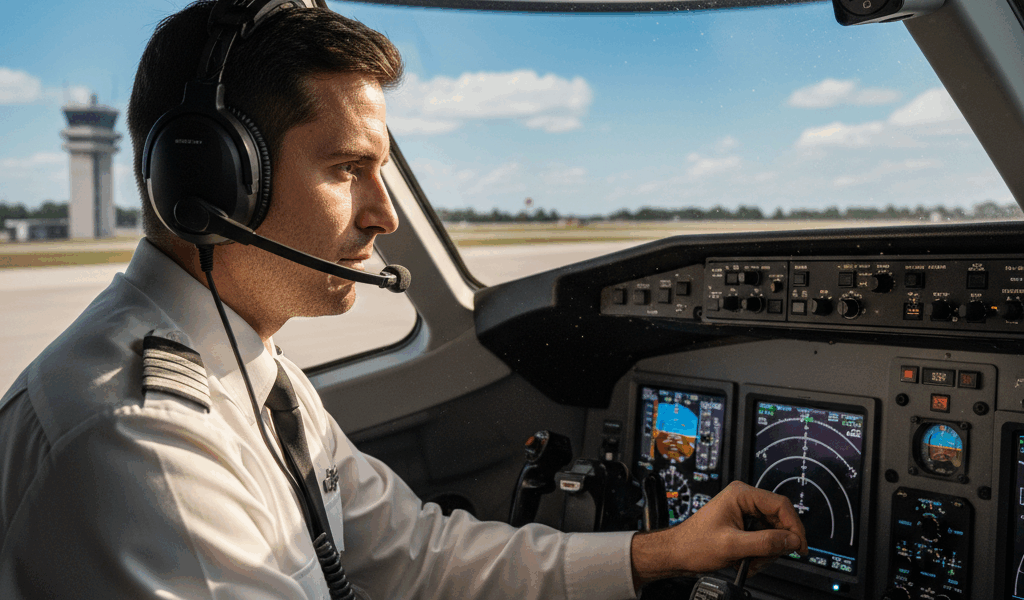
As someone who struggled mightily with radio calls during my own training, I learned everything about overcoming mic fright through sheer repetition. Probably should have led with this: talking to ATC gets exponentially easier with practice, but you have to push through the discomfort first.
Today’s lesson focused entirely on radio work. My student has solid stick-and-rudder skills but locks up completely when it is time to key the mic. I have seen this pattern dozens of times – it only resolves with exposure.
Why Radio Calls Feel So Intimidating
Radio communications intimidate new pilots for legitimate reasons. You are talking to professionals who handle hundreds of aircraft daily, using specialized phraseology you barely understand, while simultaneously trying to fly an airplane. The cognitive workload is absolutely real.
But here is what I tell every nervous student: controllers genuinely want to help you. They are not sitting there judging your technique or keeping score of your stumbles. They just need clear, concise information to do their job safely.
How We Tackled It
Started on the ground first, reviewing standard phrases – position reports, traffic pattern calls, VFR flight following requests. We actually scripted out word-for-word what to say for each phase of today’s flight. That has gotten complicated with all the different scenarios, but having it written down helps tremendously.
Then we flew to a towered field about 25 miles away. I had my student make every single radio call – initial contact, traffic advisories, pattern entry, landing clearance. I stayed completely off the radios unless safety required intervention. My hands were ready, but my mouth stayed shut.
What Changed
By the third approach, the hesitation was gone. The calls came out naturally, and my student even caught a readback error before I did. That is what makes this approach so effective – forced exposure builds genuine competence.
Tomorrow’s Plan
Practice VFR flight following with approach control. Different controllers, different phraseology, same core principle: think before you speak, keep it short, and never be afraid to ask for clarification if you did not understand something.


Stay in the loop
Get the latest wildlife research and conservation news delivered to your inbox.