
Ask any CFI about their checkride, and you’ll hear stories of marathon oral exams, demanding flight evaluations, and relief at finally passing. The CFI practical test is widely considered the most challenging checkride in general aviation—but the certificate it grants opens doors beyond just hour building.
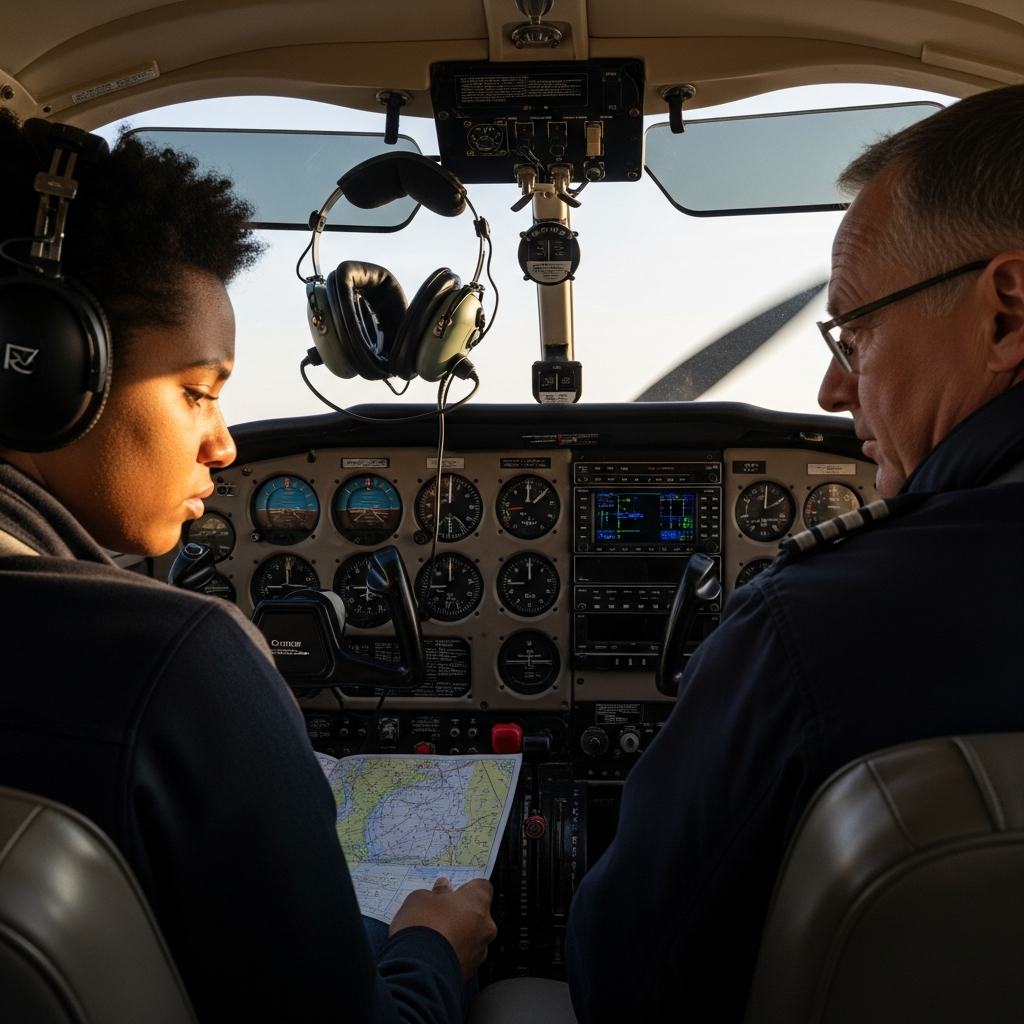
Why the CFI Checkride Is So Demanding
The CFI checkride evaluates a different standard than other certificates. Previous checkrides asked whether you could fly safely. The CFI checkride asks whether you can teach others to fly safely—a fundamentally higher bar.
Knowledge Depth
You must know everything a private and commercial pilot should know, plus understand it deeply enough to explain it. When the examiner asks about adverse yaw, you need more than the textbook definition—you need to explain why it happens, how it varies with conditions, and how to help students understand it.
Teaching Skill
Beyond knowledge, you must demonstrate teaching ability. Can you present material clearly? Can you assess student understanding? Can you adapt when your explanation doesn’t work? These skills are evaluated throughout the checkride.
Right Seat Proficiency
Most training occurs from the left seat. CFIs instruct from the right. Flying from the right seat while explaining maneuvers requires cognitive bandwidth that takes time to develop.
Oral Examination
The CFI oral regularly runs 4-6 hours or longer. The examiner covers two domains: instructor knowledge and technical knowledge.
Fundamentals of Instructing
The FOI portion covers learning theory, teaching methods, student evaluation, and instructor responsibilities. Why do students plateau? How do you handle a student who freezes on the controls? What’s the difference between rote and correlation learning? These questions test your understanding of how people learn.
Technical Knowledge
The technical portion covers everything you might need to teach. Aerodynamics, weather, regulations, aircraft systems, performance—all fair game. The examiner may ask you to teach a topic as if they were a student, evaluating both accuracy and teaching technique.
Lesson Plans
You’ll present lesson plans on topics assigned from the PTS. These should demonstrate organization, appropriate depth, and teaching methodology. Examiners evaluate whether your lesson would actually teach the material effectively.
Flight Evaluation
The flight portion demonstrates that you can perform, demonstrate, and teach required maneuvers.
Maneuvers
You’ll perform commercial-level maneuvers from the right seat while explaining what you’re doing and why. For each maneuver, you should be able to demonstrate correct performance, describe common errors, and explain how to correct those errors.
Emergency Procedures
Examiners expect you to handle and teach emergency procedures. What do you do if a student freezes on the controls? How do you recover from an unusual attitude while explaining the recovery?
Spin Training
CFI applicants must demonstrate spin proficiency. You’ll show spin entry, developed spin, and recovery—explaining each phase as if teaching a student.
Preparation Strategy
Passing the CFI checkride requires thorough, systematic preparation.
Ground Preparation
Study the FOI material until you genuinely understand learning theory—not just for the test, but because you’ll use it. Review technical knowledge systematically, ensuring you can explain concepts at various depth levels.
Prepare lesson plans for all topics in the PTS. Practice presenting them until you can teach each topic smoothly. Have other instructors or knowledgeable pilots critique your presentations.
Flight Preparation
Build right-seat proficiency through dedicated practice. Fly all maneuvers while verbally explaining them—this develops the cognitive split required during the checkride.
Practice teaching actual lessons. Work with students if possible, or have fellow CFI candidates role-play as students. Real teaching experience reveals gaps in your explanations.
Mock Checkrides
Have an experienced CFI conduct mock checkrides under realistic conditions. The fatigue and pressure of a full checkride simulation reveals whether you’re truly prepared.
Common Failure Points
Certain weaknesses cause repeated failures:
Insufficient FOI preparation: Candidates who memorize definitions without understanding concepts struggle with applied questions.
Teaching versus telling: Explaining how to do something isn’t the same as teaching it. Examiners distinguish candidates who teach from those who merely describe.
Right-seat deficiencies: Candidates who haven’t practiced enough from the right seat struggle with sight pictures and control coordination.
Oral exam fatigue: Multi-hour orals test stamina. Candidates who fade late in the oral make errors they wouldn’t make when fresh.
Is It Worth It?
The CFI certificate demands significant preparation. The question of whether it’s worth it depends on your goals.
For Hour Building
If CFI is purely an hour-building vehicle toward airlines, weigh the preparation time against alternative paths. CFI remains the most common route, but other options exist. The CFI certificate does provide advantages: multi-engine instruction builds valuable time, and the teaching experience develops skills airlines value.
For Career Instructors
If teaching flying appeals as a career rather than a stepping stone, the CFI certificate is obviously essential. Career instructors find satisfaction in developing new pilots, and the flexibility of instructing offers lifestyle advantages some airline careers don’t.
For Skills Development
Even pilots not planning to instruct professionally find CFI training valuable. The deep understanding required to teach makes you a better pilot. The ability to analyze flight performance helps in any flying context. Many non-career instructors maintain CFI currency for the knowledge refresh the training provides.
For Insurance and Safety
CFIs can provide instruction to family members, partners, and flying club members. Having a CFI in an ownership group or family simplifies proficiency training. The liability and safety benefits have value beyond compensation.
Beyond Initial CFI
The initial CFI certificate typically authorizes airplane single-engine instruction. Additional ratings expand capability:
CFII: Instrument instructor authorization allows teaching instrument students—a significant portion of training demand.
MEI: Multi-engine instructor authorization provides access to multi-engine training opportunities and builds valuable multi time.
Each additional rating requires additional checkrides, though they’re typically shorter than the initial CFI.
The CFI Standard
The CFI checkride’s difficulty exists for good reason. New instructors immediately take responsibility for students’ lives and learning. The standard ensures that CFIs can actually teach, not just fly. Meeting this standard requires significant effort, but that effort produces instructors capable of developing safe, competent pilots.
If you choose the CFI path, embrace the preparation required. The skills developed—deep technical knowledge, teaching ability, right-seat proficiency—serve you throughout your flying career, whether you instruct for months or decades.




Stay in the loop
Get the latest skyhighflighttraining updates delivered to your inbox.