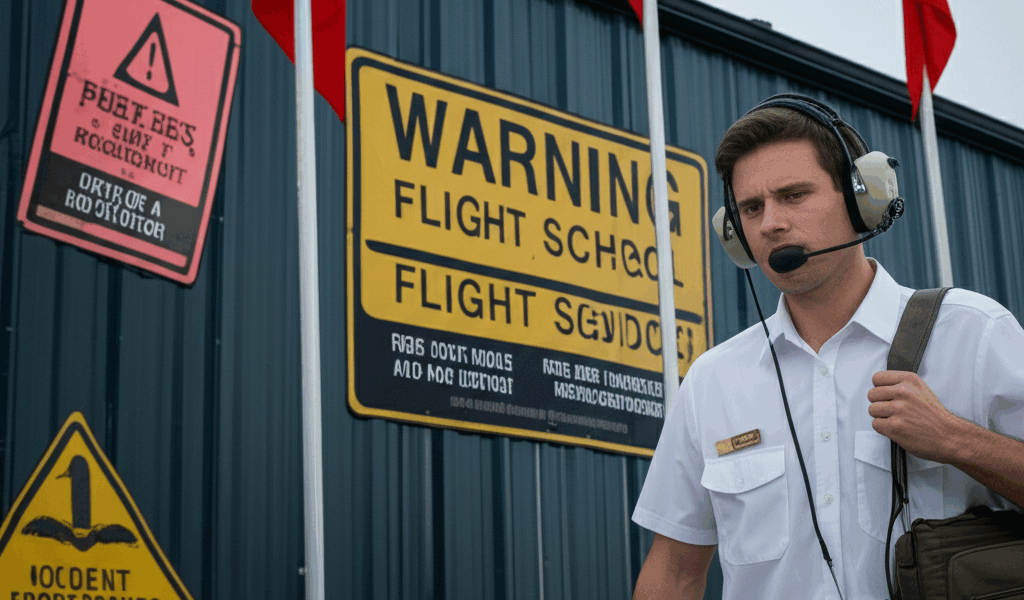
Choosing a flight school shapes your entire training experience. A good school produces competent, confident pilots efficiently. A problematic school wastes money, extends training, and sometimes produces pilots with dangerous gaps. Recognize these warning signs before signing a training contract.
Red Flag 1: Poor Aircraft Availability and Condition
Aircraft are the core product of any flight school. Their availability and maintenance reveal the school’s priorities and financial health.
Availability Problems
If scheduling lessons requires booking weeks in advance, training will drag indefinitely. Consistent flying builds skills; large gaps between lessons cause regression. A school should have sufficient aircraft for enrolled students to fly at least 2-3 times weekly.
Ask specific questions: “If I want to fly tomorrow at 10am, is that typically available?” Watch for hedging or qualifications in the answer.
Maintenance Issues
Walk through the flight line. Do aircraft look maintained? Are there multiple planes grounded with “inop” stickers? Visible neglect of exterior often reflects invisible neglect of systems.
Ask about squawk response time. A well-run school addresses reported problems promptly. If instructors mention ongoing issues that “haven’t been fixed yet,” maintenance prioritization is questionable.
Red Flag 2: High Instructor Turnover
Instructors are the most important factor in training quality, and their retention reveals school health.
The Revolving Door
If every instructor is building hours to leave for airlines, your training suffers from inexperience. Ask how long current instructors have worked there. If the average is under a year, turnover is high.
Why It Matters
High turnover means you’ll likely change instructors during training, disrupting continuity. Each new instructor needs time to assess your skills and adjust their approach. Experienced instructors recognize problems earlier and teach more efficiently.
What to Look For
Schools with career instructors—those who teach because they love teaching, not just as a stepping stone—provide more stable training environments. These instructors invest in student success because they’ll be there to see the results.
Red Flag 3: Aggressive Sales Tactics
Flight training is expensive. Legitimate schools explain costs clearly and allow time for decisions. High-pressure sales suggest financial problems or predatory practices.
Warning Signs
“Sign up today” discounts that expire immediately. Pressure to purchase large block hours upfront. Reluctance to provide written pricing. Dismissive responses to questions about total training costs.
Block Time Caution
Purchasing block hours often offers discounts, but consider the risks. If the school closes, prepaid hours may be lost. If you’re dissatisfied and want to transfer, prepaid hours may not be refundable. Start with pay-as-you-go until you’re confident in the school.
Realistic Cost Estimates
A school claiming you’ll complete private pilot training in exactly 40 hours is either inexperienced or dishonest. The national average exceeds 60 hours. Honest schools provide realistic cost ranges and explain factors that affect training duration.
Red Flag 4: Inadequate Ground Training
Ground school develops the knowledge foundation for safe flight. Schools that minimize or skip ground training produce under-prepared pilots.
What to Expect
Structured ground training—whether in-person classes, assigned online courses, or pre-lesson briefings—should be part of every school’s program. Ground and flight training should integrate, with each reinforcing the other.
Warning Signs
“We don’t do formal ground school” or “you can do ground on your own” suggests the school prioritizes billable flight time over comprehensive training. While self-study works for some students, the school should provide guidance and verify understanding.
Red Flag 5: Lack of Structure and Curriculum
Effective training follows a logical progression. Each lesson builds on previous skills. Schools without structured curricula produce inconsistent results.
What to Ask
Request to see the training syllabus. A professional school has documented stage checks, lesson plans, and progression standards. If the response is “we tailor everything to the individual,” ask how they ensure complete coverage of required skills.
Stage Checks
Quality schools include stage checks—evaluations by instructors other than your primary—at key training milestones. These catch problems and provide fresh perspectives. Schools without stage checks may miss gaps in training.
Red Flag 6: Poor Facilities and Resources
While fancy buildings don’t teach flying, inadequate facilities indicate broader problems.
Briefing Areas
Pre-flight and post-flight briefings require quiet space. If briefings happen in hallways or over aircraft engine noise, instructional quality suffers. Schools should provide appropriate briefing rooms.
Training Materials
Current charts, updated publications, and functioning training aids should be available. Outdated materials suggest the school isn’t reinvesting in quality.
Examiner Relationships
Ask about checkride scheduling. Good schools have established relationships with DPEs and can schedule checkrides within reasonable timeframes. If examiners avoid the school or scheduling takes months, investigate why.
Red Flag 7: Negative Reputation
A school’s reputation among students and local pilots reveals patterns that brief visits might miss.
Where to Check
Online reviews provide data points, though remember that reviews skew negative. Ask current students about their experiences. Talk to pilots at local airports about the school’s reputation. Contact the local FSDO about any complaints or enforcement actions.
What to Look For
Patterns matter more than individual complaints. Every school has unhappy students, but consistent themes—billing disputes, maintenance concerns, instructor problems—indicate systemic issues.
Positive Signs to Look For
Beyond avoiding red flags, seek positive indicators:
Proud students: Current students who enthusiastically recommend the school indicate quality.
Organized operations: Efficient scheduling, clear communication, and professional administration suggest well-run operations.
Safety culture: Emphasis on safety during introductory meetings, not just sales pitch.
Reasonable promises: Honest assessment of training duration and cost, not optimistic minimums.
Satisfied instructors: Instructors who speak positively about the school indicate good working environment.
Making Your Decision
Visit multiple schools before committing. Take discovery flights at each to experience their aircraft, instructors, and operations. Trust your instincts—if something feels wrong, investigate before proceeding.
Remember that the cheapest option often isn’t the best value. Extended training due to poor instruction or aircraft availability costs more than slightly higher hourly rates at a quality school. Invest in training that produces a competent, confident pilot efficiently.
Your flight school choice shapes your introduction to aviation. Choose wisely, and your training experience will build the foundation for a lifetime of safe flying.




Stay in the loop
Get the latest skyhighflighttraining updates delivered to your inbox.