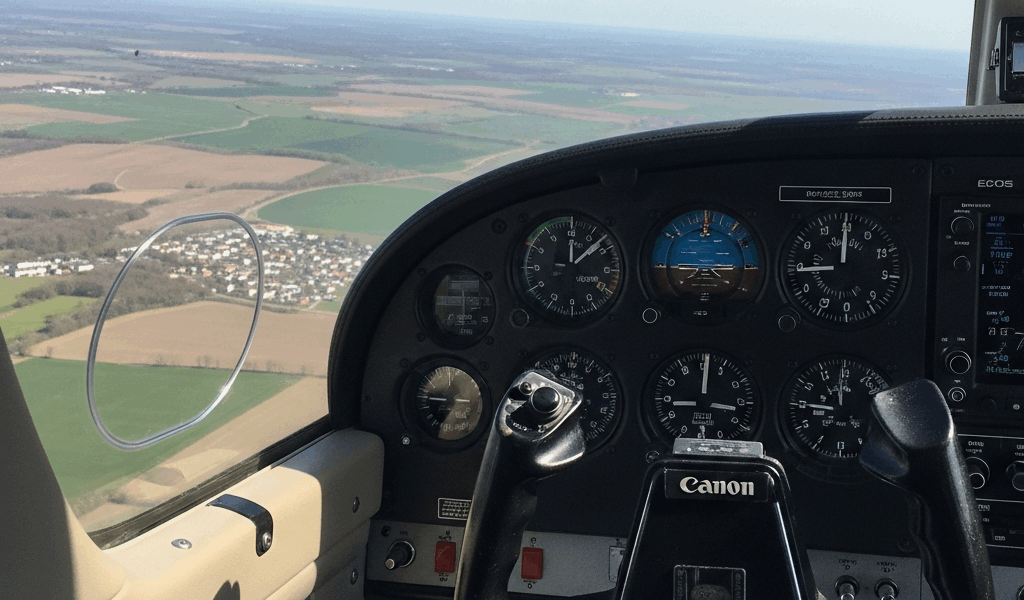
What a Slip Should Feel Like vs What It Does Feel Like
Slips have grown more complex with the conflicting advice flying around — no pun intended. You’re on short final, runway dead ahead, crosswind pushing you sideways, and your CFI says “slip it.” You think you know what that means. Then you’re actually in it. The nose swings left when you expected right. The wing wants to drop despite the pressure you’re holding. Altitude bleeds away faster than anything you’ve seen before. The stick feels heavier. The rudder feels locked. Suddenly you’re not in control — or at least it doesn’t feel that way.
That sensation is exactly why student pilots lose it in a slip. Not because the maneuver itself is broken. Because it feels like it shouldn’t work, and that gap between expectation and reality triggers overcorrection. Hard overcorrection.
A proper slip should feel almost coordinated, but wrong. You’re banking toward your landing point while pointing somewhere else entirely. The fuselage sits angled to the wind. Descent rate is steep but steady — intentional, clean, under complete command. Airspeed stays where you want it.
What most students actually feel is confusion followed by panic. The airplane pitches or yaws unexpectedly. Vertical speed spikes. You lose track of your heading relative to the runway centerline. You forget what your hands are even doing.
That difference lives entirely in input sequence — and in understanding why each input actually matters.
The Input Order Is Where Most Students Go Wrong
I learned this the hard way at 15 hours, on a gusty Tuesday afternoon at a small field outside Salinas. My instructor told me to slip left onto final. I added left rudder first. That’s the mistake — and I made it confidently.
When you step on left rudder before banking, the nose pivots left immediately but the fuselage keeps facing forward. You’re skidding sideways. The inside wing drops without the bank to support it. Vertical speed jumps. Everything feels broken because it is broken.
The correct sequence is bank first toward where you want to descend, then apply opposite rudder to stop the turn from continuing. That’s it. Two inputs in the right order.
Here’s what that actually looks like. You’re on right base, 12-knot crosswind from the left, too high by about 200 feet before the threshold.
- Bank left — into the wind — to 15 or 20 degrees.
- As the nose begins to turn left, apply right rudder to stop that turn.
- Hold both inputs steady. The airplane slips — nose pointing right of the runway, wings banked left toward it.
- Descent rate increases. Airspeed holds steady or climbs slightly from the nose-down pitch.
- To recover: level the wings first, then release the opposite rudder.
Reverse that sequence — rudder before bank — and everything inverts. The controls fight you because you’re fighting physics rather than flying the maneuver.
The bank establishes your descent path. The opposite rudder just prevents unwanted turn. One controls trajectory. The other controls rotation. Most students think rudder is primary and apply it first. Wrong tool, wrong order.
Forward Slip vs Sideslip and Why It Matters on Final
The piece that matters most here. The confusion between these two runs deeper than most CFIs realize — or at least deeper than most CFIs address before sending you out to practice.
A forward slip is what you use when you’re carrying too much altitude with not enough distance left to burn it off normally. You’re pointed at the runway but angled so the fuselage is sideways to the relative wind. That increases drag dramatically. You descend steeply. Ground track still goes toward the runway. Think of it as a parachute you can control.
A sideslip is a different animal. You’re crabbed into the wind on approach, then just before touchdown, you bank into the wind and apply opposite rudder to align the fuselage with the runway centerline. Still moving toward the runway — just no longer skidding sideways across the ground. Think of it as steering into a skid.
Those two things sound similar. They are not.
On a forward slip, you hold bank and opposite rudder until you’ve bled the altitude you need, then recover cleanly by leveling the wings. On a sideslip, you’re working ailerons and rudder together continuously — crabbing the airplane and then aligning it just before the mains touch.
Most students don’t consciously know which one they’re executing, so they half-commit to both. Some bank, some opposite rudder, not enough of either to make the maneuver actually work. The airplane doesn’t slip properly. Descent rate doesn’t increase as expected. They add more rudder — which turns the airplane instead of holding it straight. Everything falls apart from there.
Why the Airplane Feels Like It’s Fighting You
When you bank and apply opposite rudder, something strange happens that most training materials gloss over until you ask exactly the right question.
The airplane wants to roll back level and resume a normal turn. That’s dihedral effect — natural stability built into the wings. Bank left, the low wing sees more air, generates more lift, wants to push back up. Your instinct is to help it. You reduce bank pressure. The slip collapses. Now you’re just in a normal turn with a confused look on your face.
The second strange thing: opposite rudder pressure feels heavy and somehow wrong. The airplane is pointing sideways relative to its direction of travel. Adverse yaw is trying to make the nose follow the wings, and you’re holding it back with foot pressure. Most students feel that pressure building and assume they’re doing something harmful. So they reduce it. The nose swings. The slip deteriorates.
And then there’s your inner ear — loudly insisting the airplane is about to stall or spiral. Banked, nose down. Textbook spiral dive geometry. Every instinct screams level the wings immediately.
Don’t. Hold the bank. Trust the airspeed indicator. It won’t stall. Airspeed stays steady or increases.
First time I held a full slip all the way through, the vertical speed indicator in that Cessna 172 read 1,200 feet per minute. At idle power. I was genuinely convinced I’d broken something. My CFI just smiled and said, “Now recover.” I leveled the wings. Descent rate dropped to 400 feet per minute instantly. That was the moment I actually understood — the slip wasn’t fighting me. I’d been fighting the slip the entire time.
How to Practice Slips So They Stop Feeling Scary
The fix is desensitization through altitude. Do this drill at 3,000 feet AGL on a calm day with no meaningful wind component — at least if you want clean, unambiguous feedback on what your inputs are doing.
Enter a shallow left bank. Apply full right rudder. Hold it for five seconds. Count out loud — actually say the numbers. Feel what the airplane does. Nose dips slightly. Altitude bleeds. Airspeed barely moves. Recover by leveling the wings first, then releasing rudder. Repeat on the other side.
Ten repetitions per lesson. Then increase the bank to 20 degrees. Hold longer. Keep going until the sensation stops feeling like imminent failure and starts feeling like deliberate control. That shift happens around repetition thirty, in my experience — maybe sooner, maybe later depending on how tense you are.
The other thing most students miss entirely is the airspeed scan. During a slip, check your airspeed every three seconds. It should be steady. Climbing airspeed means you’re pitching down too much. Bleeding airspeed means you’re pitching up. Small stick adjustments fix both. Most students stare out the window during slips — understandably, because they’re scared — and that’s when airspeed starts doing weird things. Keep the scan. Believe the instruments.
Slips will never feel natural. They feel sideways because they are sideways. But they stop feeling scary after you’ve done them fifty times at altitude with no runway underneath you and nothing to panic about. By the time you actually need one on short final in real wind, your hands know the sequence even if your brain is still arguing about it.


Stay in the loop
Get the latest skyhighflighttraining updates delivered to your inbox.